A STREET OF JEWELERS
CANAL STREET’s jewelry shops are part of CHINATOWN’s everyday commercial history. Gold chains, jade bangles, wedding jewelry and repair counters share a district with banks, groceries and restaurants. City Lore’s account of GOLDEN JADE JEWELRY describes the concentration of jewelers between BROADWAY and BOWERY, and the mix of customers and traditions served across a single shop counter.
1972 · A FAMILY BUSINESS ARRIVES
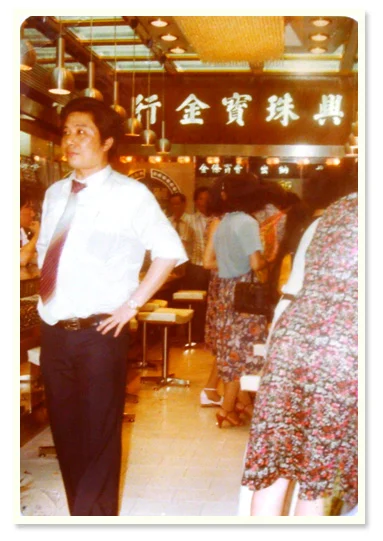
One documented thread begins with Lap Choi Lau. According to LAI HING’s company history, he opened LAI SANG JEWELRY in HONG KONG in 1962 and established his first NEW YORK store at 217 CANAL STREET in 1972. The company describes his aim as offering a broader selection of 24-karat gold jewelry to the local Chinese community, alongside jadeite. That is the history of one family business, not a claim that it founded the whole district.
1993 · ANOTHER GENERATION OF SHOPS
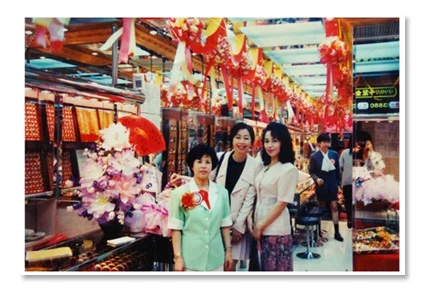
LUCKY DIAMOND’s own history records its opening in 1993 at 159A CANAL STREET, before its move to 169 CANAL STREET. Founder Charlie Wong is a bench jeweler and goldsmith from a family of jewelers. Stories like these put skilled work—setting, fabrication and repair—alongside the necklaces and rings visible from the sidewalk.
A TRADE THAT KEEPS CHANGING
The audience has widened over time. A 2018 interview with NEW TOP JEWELRY’s Jane Shuai describes a small neighborhood store becoming a destination for younger customers from around the world. Family milestones, personal style and long-standing customer relationships can all meet at the same counter. The photographs here come from LAI HING’s historical archive, rather than presenting older storefronts as current listings.
WALKING THE DISTRICT
Take time to look at the shops around CANAL and BOWERY, and ask before photographing inside. For a purchase or repair, discuss the material, work and terms directly with the jeweler. The neighborhood’s history is best understood as many businesses and generations, each with its own story.