ONE BUILDING, TWO ADDRESSES
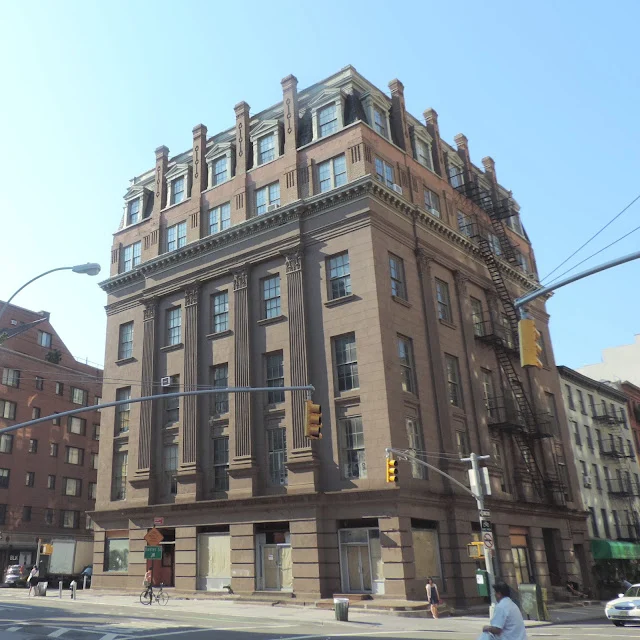
224 CENTRE ST belongs to ODD FELLOWS HALL, the landmark also recorded as 165–171 GRAND STREET. The two addresses refer to the same building at the corner of CENTRE and GRAND, with another face on BAXTER STREET. The city’s 224 CENTRE STREET presentation identifies it by that history.
1847–48 · A PLACE TO GATHER
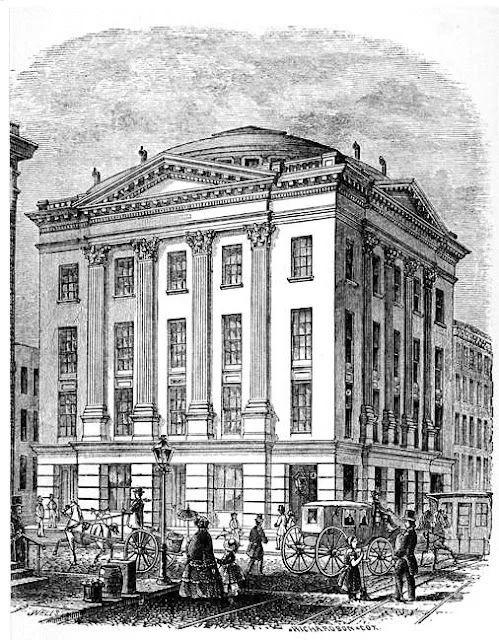
The Independent Order of Odd Fellows commissioned architects Joseph Trench and John Butler Snook to build its hall in 1847–48. This fraternal organization supported sick members, people in need and orphaned children. Its hall association planned rooms for reading, teaching and meetings. A library and lodge rooms made the building a place for collective life. These origins are documented in the 1982 landmark designation report. An 1862 guidebook reproduced in that report describes richly decorated rooms in several historical styles.
THE BUILDING AT STREET LEVEL
The Historic Districts Council identifies the hall as a rare surviving institutional building from the 1840s and an early example of Anglo-Italianate architecture in NEW YORK. Look up from the storefronts: the broad, flat wall surfaces are framed by enormous pilasters—shallow columns attached to the facade. A heavily articulated base supports the quieter upper stories. The scale of those vertical elements helps the building hold its corner even among later neighbors.
1881–82 · A NEW ROOFLINE
As the Odd Fellows moved uptown, printing-press manufacturer R. Hoe & Company acquired the building and adapted it for commercial and manufacturing use. Architect John Buckingham added the upper two floors in 1881–82. The original dome and pediments came down; a mansard roof, dormer windows and brick chimneys changed the silhouette. The landmark report records both this conversion and the city’s designation of the building on August 24, 1982.
CENTRE ST TODAY
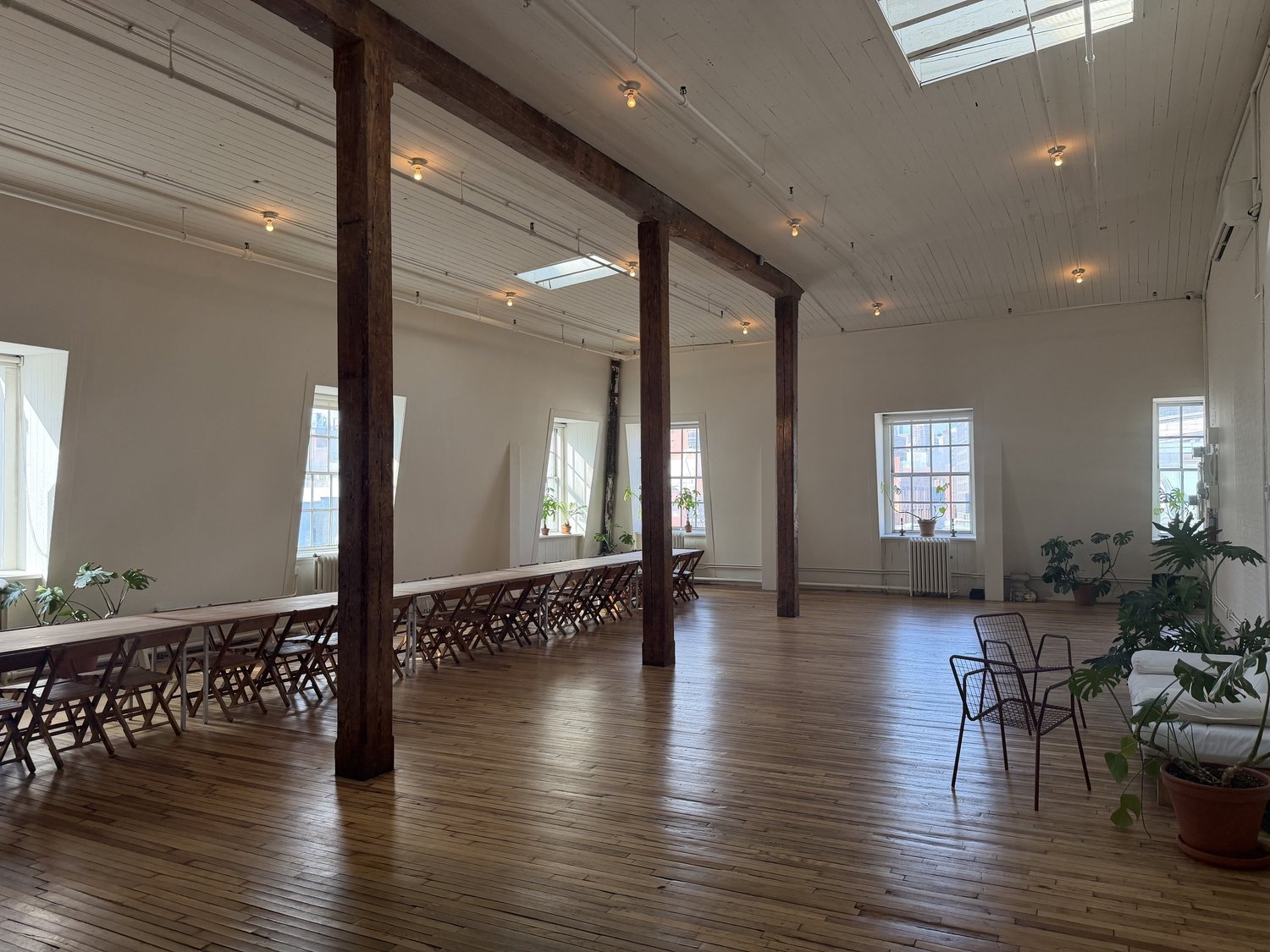
CENTRE ST’s private dining room is on the sixth floor at 224 CENTRE ST. The current interior shown here is a present-day venue photograph, not a reconstruction of an Odd Fellows meeting room. Before coming upstairs, take a moment at the corner: the brownstone hall and its later roof tell two different chapters of the same building.